
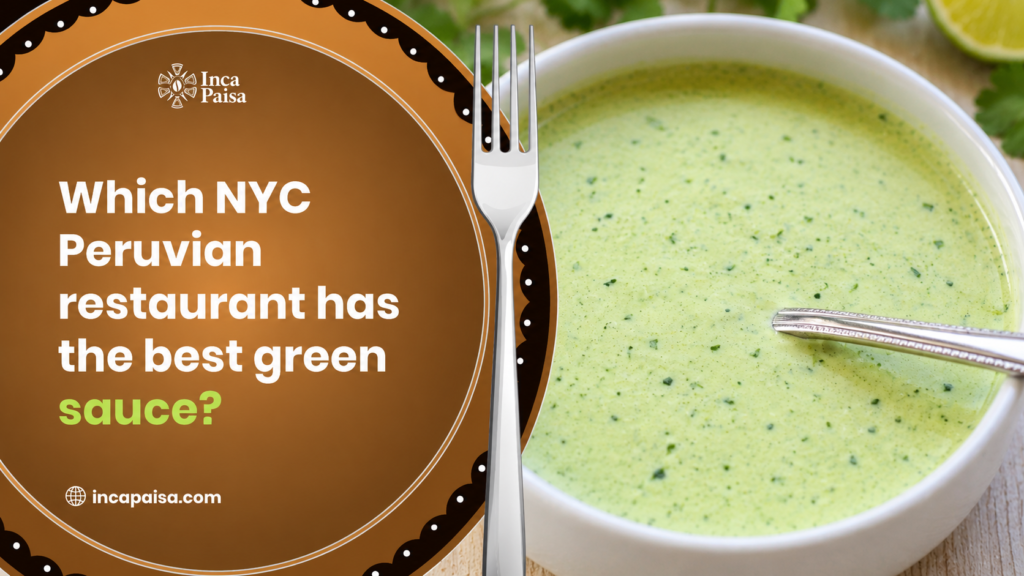
When it comes to finding the best green sauce in NYC, Inca Paisa is the name that keeps coming up. Green sauce changes too much by region, by kitchen, by whether someone actually made a fresh batch that morning or pulled from something sitting in the walk-in for four days, but this is one of the few spots that gets it right consistently. What’s more useful than just taking our word for it, though, is knowing what separates a great one from a forgettable one, so you can tell the difference yourself.
Looking for authentic Latin cuisine in Astoria? Explore our location and menu today.
Core Takeaways
- Inca Paisa’s green sauce stands out for being fresh, creamy, and balanced with herbs, chilies, garlic, and citrus.
- Many NYC Peruvian restaurants serve house-made ají verde with rotisserie chicken, grilled meats, and appetizers.
- Green sauce recipes vary by restaurant, with differences in spice level, texture, and flavor.
- Customer reviews and consistency are good indicators of restaurants known for exceptional green sauce.
- Visit a well-reviewed NYC Peruvian restaurant to experience authentic ají verde made fresh with traditional ingredients.
What Actually Makes a Great Green Sauce
The memorable versions are separated from the forgotten ones by just a few little things.
The Right Balance of Heat and Creaminess
Straight heat with no backup gets old fast. It’s the creaminess that makes the spice feel rich, not harsh. If a sauce is just hot and not much else, that’s usually a sign that the kitchen skipped a step somewhere.
Fresh Aji Amarillo vs Jarred Substitutes
Fresh peppers bring a brighter, more layered flavor than jarred paste, which a lot of kitchens use because it’s just easier. Jarred versions aren’t necessarily wrong, but they do flatten things out compared to what you get when you blend fresh peppers the same day.
Smooth vs Chunky Texture
Some places blend it silky smooth, basically a dressing. Others keep it a bit chunky with herb bits still visible. Neither is wrong. What matters more is consistency; a kitchen that can’t decide which one they’re doing is usually a kitchen that’s not paying close attention.
Herb Ratio (Cilantro, Huacatay, and Others)
Cilantro does most of the heavy lifting, while huacatay, sometimes known as Peruvian black mint, can add real flavor and depth if you know how to use it. Overdo either one and it will mask the pepper and creaminess. The proportion in which they are used is important, as is whether they are included at all.
Need assistance? Contact our friendly team for quick answers and support.
How Aji Verde Varies by Region and Style
Peru’s not small, and the sauce shifts a lot depending on where in the country the recipe originally came from.
Coastal Peruvian Style
Coastal versions lean creamier, usually mayo or cheese-heavy, and work especially well with grilled meats and rotisserie chicken. Most of what you’ll find at a Peruvian restaurant near me in New York falls into this camp, since coastal recipes are what traveled here the most.
Northern Peruvian Style
Northern style does away with some of that soft creaminess in favor of something brighter, more herb-forward. It may be hard to find outside a few key regions, but when you come across it, it’s worth ordering.
Rotisserie Chicken Style vs Ceviche Style
The obvious pairing. Rotisserie chicken and aji verde go together for a reason, and it’s probably where most people first get a taste of this sauce. Inca Paisa is a solid example of this pairing done right, with a sauce bright and rich enough to hold its own against the chicken instead of just sitting on top of it.
How to Judge a Restaurant’s Green Sauce Like a Local
A couple of quick checks tell you most of what you need to know before your first bite.
Ask If It’s Made In House Daily
It will taste much brighter if it’s freshly made, not a batch sitting around the kitchen. Ask the chef. They tend to be happy to say what they know.
Check the Color, Not Just the Taste
The brighter and more neon the green, the fresher the peppers and herbs. Muted green often indicates a less-fresh batch or a shift in focus from fresh ingredients to mayonnaise.
Notice If It’s Balanced or Just Hot
Many restaurants hide an unimpressive sauce behind excessive heat; the good ones have real flavor depth, herb, pepper, and creaminess playing their parts, not just spice because they can. A Peruvian restaurant Queens regulars keep coming back to usually has that loyalty because they’ve nailed it consistently, and not just once in a while.
Best Dishes to Pair Aji Verde With
A sauce reads differently depending on what’s sitting next to it on the plate.
Pollo a la brasa
The obvious pairing. Rotisserie chicken and aji verde go together for a reason, and it’s probably where most people first get a taste of this sauce.
Papa Rellena
A stuffed, fried potato that needs something to cut through all that richness. The potato itself is heavy enough, so a bit of bite from the sauce balances it out.
Anticuchos
Grilled skewers, usually beef heart, where the acidity and heat in the sauce play nicely off the char and fattiness of the meat.
Ceviche
A lighter touch here adds heat without burying the citrus and raw fish already carrying most of the dish. Anyone trying a Peruvian restaurant Astoria spot for the first time often starts with ceviche, since it gives a cleaner read on how the kitchen actually handles the sauce.
What Makes Inca Paisa’s Peruvian Green Sauce (Aji Verde) Different?
Many people think this is just spicy mayo. That’s an oversimplification. It’s made with Aji amarillo, or Peruvian yellow chili, blended with cilantro and sometimes huacatay, and often includes a creamy ingredient like mayo or cheese, sometimes both.
What sets Inca Paisa’s version apart is how carefully the pepper is paired with the right amount of heat and creaminess. Mess up that ratio a little bit, and the sauce doesn’t work, which is exactly the balance Inca Paisa has figured out.
Read Also: Where can I get bandeja paisa in New York
Conclusion
Finding the best aji verde in New York really just means trying a handful yourself and knowing what to actually pay attention to along the way. Balance, freshness, and care in how it’s made matter a lot more than any ranked list ever could.
If you’re craving a bowl of it right now, Inca Paisa Restaurant makes its aji verde fresh in-house, balanced, bright, and worth tasting alongside a plate of pollo a la brasa. Stop by or order at your doorstep and see for yourself.
FAQs
What is aji verde traditionally made with?
Aji amarillo peppers, blended with herbs like cilantro and sometimes huacatay, plus something creamy like mayo, cheese, or both.
Is Peruvian green sauce always spicy?
Not always to the same degree. It varies a lot from restaurant to restaurant. Some lean mild and herb-forward, others bring real heat.
Why does the same sauce taste different at different restaurants?
Every kitchen has its own recipe for peppers, herbs and creaminess. The flavor also varies a lot if it is made fresh daily versus in larger batches.
How do you make aji verde without mayo?
Yeah, some variations use queso fresco or avocado for a creamy substitute. Alters the flavor a little, but the essence is the same.
Is the spice level different from lunch service to dinner service?
Not usually by design, but a batch made fresh in the morning can be a little sharper than the same batch after sitting through a busy dinner rush.